or: Where are you really from?
My grandmother had remarkable, somehow ageless skin. Like she discovered the whole glass skin thing before glass skin had a name and was a beauty trend. She also had a perfect perm — the Asian grandma perm — for as long as I could remember. It always worked for her, and I never knew how.
I also never knew how to tell her any of this. She didn’t speak much English. I don’t speak Toisanese, or any Chinese dialect for that matter, besides what little Mandarin I struggled to learn in Chinese 101. So mostly what I did was sit across from her and smile and eat whatever appeared in front of me and hope the smiling and the eating said what I meant, which was: Thank you. Your cooking is incredible. You look incredible. You are incredible. I genuinely hope I got your genes.
This is, more or less, my experience of being Chinese-American.
I didn’t go to Chinese school on the weekends. I took exactly one piano lesson — because my cousins were taking lessons, and I showed up and assessed the situation and decided “nahhhh”. I did not attend an Ivy League university; I went to *gasp* a state school. I am not a doctor or a lawyer or an engineer. I’ve definitely been the only Asian person in a meeting full of white men, and I always knew my shit — which, yes, is just who I am, but also: it was never not a choice. (Unless it was math. I am pretty bad at math.)
Not stereotypically Asian-American. In certain circles, this has been noted.
But I’m also not what *ahem* many Americans consider American. I look the way I look, and in certain rooms, that’s the thing that gets clocked first — before the New York-adjacent attitude, before anything else about me.
Then there’s The Dreaded Question: “Where are you from?” (New York. Jersey City. Take your pick.)
“No, but where are you really from?” (Did you not hear me the first time?)
We do a few rounds until I get frustrated and say something resembling “I’m Chinese-American.”
My name is a case study. Amanda: after the Dynasty character, apparently; a few of my cousins also have Dynasty names. Jane: after Jane Pauley, of the Today show. Lee is the Chinese part, the one that arrives before I do. Primetime soap, network news anchor, Chinese surname… about as American a name as you can have.
I do have a Chinese name — it’s Toisanese, something to do with the moon. We think. Based on my best phonetic guess and a Gemini search, it might be “Ngut Vah” which means “Moon Flower”. But I’ll never know for sure, because the only person who knew for certain was my grandmother, and she’s gone. (P.S. Any Toisanese speakers here who can help me decipher my own name?)
So. Not Chinese enough. Not American enough. The in-between — which is a lot of us.
The label situation does not help. First generation or second generation — I have been trying to get a straight answer on this for a while. My parents immigrated here, which technically makes me first gen: first born in America, first to grow up here. My parents have referred to me as first gen my whole life. But there’s a whole discourse about whether claiming that for myself diminishes my parents, who are American, who are citizens, who have been building their lives here for decades. They are not less American because they were born somewhere else. The word “immigrant,” used a certain way, implies they never fully arrived. They were the first gen to build their lives in America; they just weren’t born here.
The labels are contested and probably always will be. I’ve started using “third culture kid” — a term that describes those raised in one culture, tethered to another, not fully fluent in either. American enough to feel out of place in China. Chinese enough that America occasionally reminds me I don’t always belong.
The third culture isn’t the absence of two others. It’s the thing that forms in between.
Recently, on vacation, my husband looked at me — he’s Indian-American, his own flavor of third culture — and said, “I’m so glad I don’t have to explain myself to you.” Different Asian heritage, same general territory.
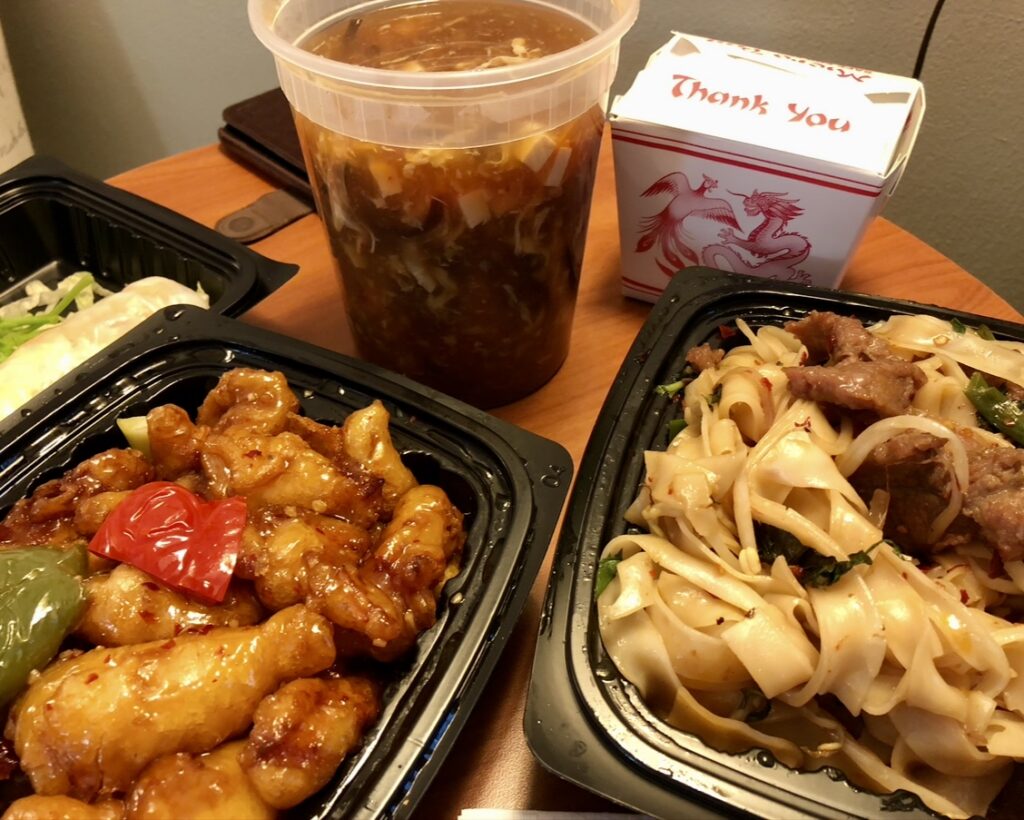
I grew up desperately wanting Lunchables. Not my mai fun and soup — the actual good food my mom packed — but the little plastic trays with the crackers and questionable meat slices and artificial cheese. I wanted bologna and cheese on white bread. Something unremarkable, something that wouldn’t require explaining. I had to explain my mai fun and soup every time.
I am now an adult who is vocally, almost aggressively, proud of that same food. Who will argue about where to get the best dumplings and order whatever comes with the head still on and feel a specific territorial joy when someone discovers Chinese food and acts like they invented it. And who is, if I’m being honest, a little mortified that I ever wanted to trade any of it for a Lunchable. I can’t even think of Lunchables right now without gagging a little. (I did love those Kraft Handi-Snacks cheese and crackers though. The one with the plastic red stick.)
The third culture-ness is a low-grade ambient condition, mostly. Something you move through without naming, until something forces you to name it. A heritage month. A question that won’t take Jersey City for an answer.
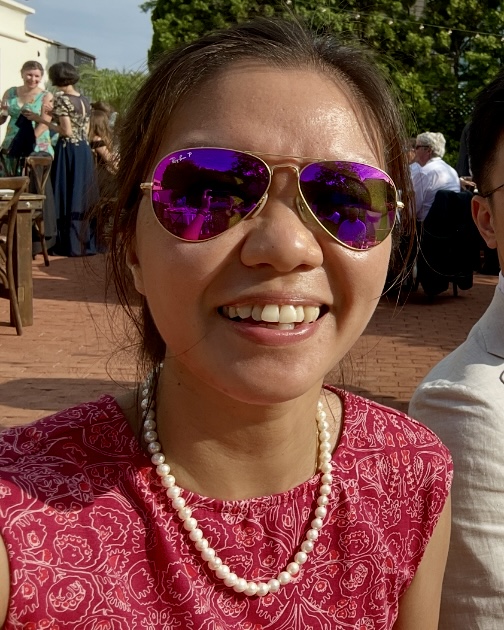
My grandmother would be at family gatherings and we’d sit across from each other, smiling and eating. She would gesture for me to put food on my plate before I finished — the universal grandmother move, which requires no language and no explanation. I am not entirely sure what she thought of me; I don’t know if anything got lost when my mom or aunts acted as translator.
I’m still hoping I got her genes.
Leave a Reply